
Emergency Communications
WHEN COMMUNICATION MATTERS MOST
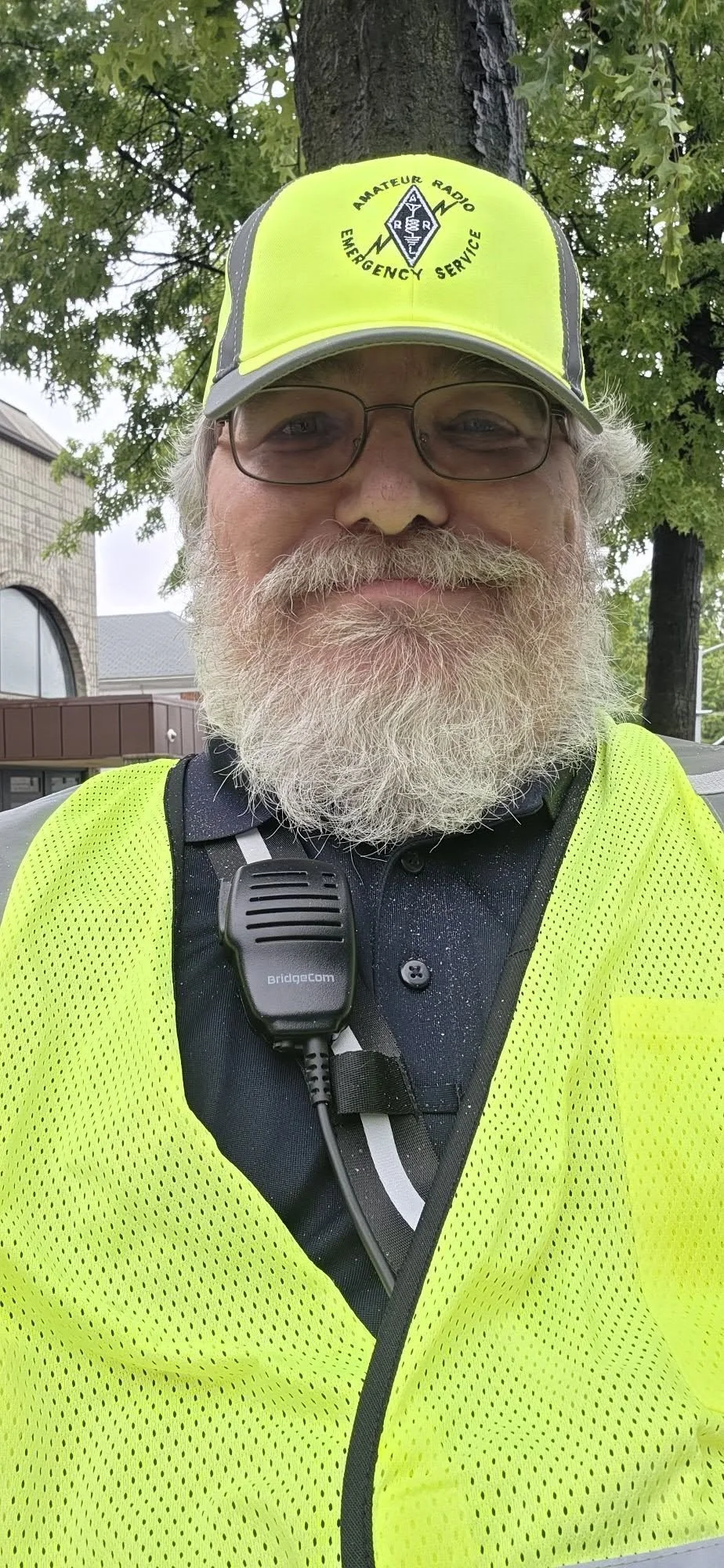
Training, preparation, and service—because when ordinary communication systems are strained, a calm operator and a working radio can still make a difference.
Emergency communications is the part of amateur radio that gives the hobby its deepest purpose for me. Making contacts around the world is exciting, experimenting with technology is fun, and there is always another radio tempting me—but being prepared to help my community is what matters most.
I do not see EmComm as a collection of equipment waiting for a disaster. It is an ongoing practice built on training, disciplined operating, realistic planning, and working within an organized response.
A radio in a drawer is not readiness.
Readiness is knowing your equipment, practicing with it, and being prepared to serve when called upon.
EXPERIENCE BEHIND THE CALLSIGN
My interest in emergency communications did not begin with amateur radio. It grew from decades of public service in the United States Coast Guard, the Coast Guard Auxiliary, and civilian emergency management.
United States Coast Guard
I served 13 years on active duty in the United States Coast Guard, ultimately as a Quartermaster Second Class. Among my assignments, I worked as a Search and Rescue Controller responsible for receiving distress information, evaluating developing situations, coordinating resources, maintaining communications, and helping support lifesaving missions.
That work taught me that communication during an emergency must be accurate, concise, documented, and calm. Information may be incomplete. Conditions may change quickly. The person behind the microphone must listen carefully, avoid assumptions, and understand where they fit within the larger operation.
U.S. Coast Guard Auxiliary
After active duty, I served another 17 years as an officer in the United States Coast Guard Auxiliary, including service as a National Division Chief.
The Auxiliary strengthened my appreciation for training, teamwork, leadership, and the vital role volunteers can play when they are properly prepared and integrated into an established organization.
Civilian Emergency Management
I later served as the Brooklyn Borough Coordinator for the New York City Emergency Management Community Emergency Response Team program.
I have also helped plan and lead emergency exercises, including serving as Incident Commander for a large search-and-rescue exercise in Coney Island. Experiences like that reinforced an important lesson: communications does not operate separately from the incident. It supports command, operations, planning, logistics, and the people working in the field.
KNOWING WHERE YOU FIT: ICS
Before choosing a radio or packing a go-bag, learn how an organized emergency response works.
The Incident Command System (ICS) provides a common structure for managing incidents. It establishes responsibilities, reporting relationships, and shared objectives so that responders from different agencies and volunteer organizations can work together. Clear language, accountability, and a manageable span of control—the number of people one supervisor can effectively direct—help keep that response coordinated.
My experience in the Coast Guard and civilian emergency management taught me to ask a few essential questions: Who am I working for? What is my assignment? Who do I report to? How does the information I handle reach the people who need it?
An amateur radio license gives me permission to operate within its privileges. An emergency assignment comes from the organization I serve.
Where Amateur Radio Fits
Amateur radio operators support the communications needs of the response. Depending on the assignment, that might mean passing messages at a shelter, maintaining contact with field teams, or providing a backup communications path.
My goal is to be a prepared communications resource: someone who understands the assignment, follows the communications plan, documents traffic accurately, and works through the designated supervisor. Knowing where to report—and waiting to be activated—is part of that preparation.
Start With the Fundamentals
For anyone interested in EmComm, my advice is simple: learn ICS early. FEMA offers introductory courses that provide a useful foundation:
IS-100.c: Introduction to the Incident Command System explains the structure, principles, and responsibilities within ICS.
IS-700.b: An Introduction to the National Incident Management System explains the broader framework that connects incident command, emergency operations centers, resource management, and coordination across organizations.
Then ask your local EmComm organization what additional training it requires. Put that learning into practice through nets, exercises, and public-service events. Learn your community’s communications plan and understand what you can realistically contribute.
Knowing how to use your radio matters. Knowing how to serve within the response makes that skill useful.
PREPARING TODAY
Today, I continue developing my amateur-radio emergency communications capabilities as a member of NYC ARES and EventHams.
I am still learning—and I intend to remain a student. Effective EmComm operators continually practice, evaluate their equipment, learn from other operators, and correct weaknesses before those weaknesses become problems in the field.
My preparation currently focuses on several complementary capabilities:
Analog Voice
Analog operation on the two-meter and 70-centimeter bands provides direct access to local repeaters and simplex communication. Unlike an internet-linked system, simplex can allow nearby stations to communicate directly without depending on outside infrastructure.
Digital Mobile Radio
DMR provides access to local, regional, and worldwide talkgroups through repeaters and through my HamSpot 5 personal hotspot. It is a powerful communications tool when its supporting radio and network infrastructure remain available.
I also recognize its limitations. A hotspot depends on power and an internet connection, so it is one layer of my communications plan—not the entire plan.
Automatic Packet Reporting System
APRS gives me a way to transmit and monitor position, movement, status, and other brief information. I currently use APRS through several portable radios and applications while learning more about its possible uses during public-service events and emergency operations.
Portable and Backup Equipment
My station is centered on battery-powered handheld radios that can move with me rather than being tied to a desk. I maintain multiple radios, antennas, charging options, and a developing go-bag so that the failure of one device does not eliminate every communications option.
Preparedness is not about carrying every piece of equipment I own. It is about selecting dependable tools, keeping them organized, and knowing how to use them before leaving home.
MY OPERATING PRINCIPLES
Serve Through the System
Emergency communicators should support the established incident organization. I do not self-deploy. I serve when requested and work within the direction of the organization or agency responsible for the operation.
Communicate Clearly
Emergency traffic is not the place for unnecessary jargon, speculation, or showing off. Messages should be clear, accurate, and passed exactly as required.
Know the Limitations
Every radio system has weaknesses. Repeaters can fail. Batteries run down. Internet connections disappear. Buildings and terrain interfere with signals. Honest planning begins by understanding what each tool can—and cannot—do.
Practice Before It Matters
Nets, exercises, public-service events, equipment checks, and ordinary time on the air all build familiarity. The middle of an emergency is a terrible time to discover that a radio was programmed incorrectly or that an operator does not understand its controls.
Remain Teachable
No license class, title, appointment, or collection of equipment makes someone finished learning. The best operators I have known are the ones who remain willing to listen, practice, improve, and help the next person learn.
READY IS A VERB
I am building a practical, layered emergency communications capability suited to my equipment, my location in Brooklyn, and the organizations I serve with.
That preparation is never truly complete. There will always be another skill to practice, another weakness to address, another exercise to complete, and another lesson to learn.
That is precisely the point.
Emergency communications is not about waiting for the day when everything fails. It is about doing the work now so that, if the call comes, I can answer:
WB2EHG—ready to serve.