The Phone Patch That Saved a Life
How an old idea from ham radio connected an eyewitness to a rescue helicopter—and helped bring a hypothermic man home alive
Sometimes saving a life comes down to putting the right two people in direct contact with each other.
I learned that during my years in the Coast Guard.
The Man They Could Not See
In the early to mid 1990s I served as Search and Rescue Controller for U.S. Coast Guard Group Humboldt Bay, Northern California. Near sunset on a chilly autumn night, a phone call came in about a person in the water off Trinidad, California. The caller could still see him, so we had something every search-and-rescue case desperately needed: someone who knew exactly where the person was.
I launched a helicopter from our air station in McKinleyville, California. That sounds as though it should have been enough. The caller could see the man. The helicopter was there to rescue him. I was the Coast Guard petty officer coordinating the case.
But there was a problem.
When the helicopter arrived, the crew could not pick out the man in the water. There were too many boats and other objects in the bay. From where the caller stood, the man’s location was clear. From the helicopter, he was lost among everything else below.
A Game of Telephone
The caller would give directions to me. I would pass them to our radio operator. The radio operator would pass them to the helicopter. The helicopter’s questions then had to travel all the way back through us to the caller.
The system was working exactly as it was supposed to work, but it was slow and awkward. Every message had to pass through two people before reaching the person who needed it.
It had become a tedious game of telephone—and somewhere at the end of it was a man in cold water.
Remembering the Phone Patch
As the messages went back and forth, I thought about my ham-radio days. Hams used something called a phone patch. In simple terms, it connected a person on a telephone directly to someone using a radio.
Why not connect the caller directly to the helicopter?
I asked our radio operator whether he could set up a phone patch.
It took him a minute or three to remember how. The equipment could do it and the procedure existed, but no one could remember the last time anyone had actually used it. It was one of those old capabilities that everyone knew about but nobody expected to need.
That day, we needed it.
When the connection was made, everything changed. The caller could finally speak directly to the helicopter crew. No more telling me what he saw so I could tell the radio operator so the radio operator could tell the helicopter. The person with eyes on the man in the water was now talking to the people who could save him.
The caller guided the helicopter directly to the man.
The aircrew conducted a flawless rescue, pulled him from the water, and flew him to a local hospital.
Fifteen Minutes
I stayed in touch with the emergency room because the Coast Guard still needed to document the case. After the patient was stable, I had the opportunity to speak with both him and the doctor.
The doctor told me that the man had been severely hypothermic. In his estimation, the man had only about 15 minutes left in the water before we would have lost him.
Fifteen minutes.
I have never forgotten that.
I did not fly the helicopter. I did not lower the rescue basket. I did not pull the man from the water. The aircrew did all of that, and they did it perfectly. The caller also deserves credit for keeping the man in sight and staying on the phone through the entire ordeal.
What I did was recognize that the way we were communicating was getting in the way—and remember another way to do it.
That old phone patch cut two people out of the middle and let the caller guide the helicopter himself. We will never know exactly how many minutes it saved. We only know what the doctor said: the man had about 15 minutes left.
The Right Connection
People often think radio is about equipment, frequencies, antennas, and how far a signal can travel. Those things matter, but they are not the point. The point is getting the right information to the right person when it matters most.
On that day, a nearly forgotten idea from my ham-radio days helped make that happen.
The helicopter found the man.
The crew pulled him from the water.
And he lived.
Keep Exploring
This story happened before smartphones, digital dashboards, and many of today’s communications tools. Its lesson still guides the way I think about radio: the best system is the one that gets the right information to the right person in time.
These pages explore how that principle continues through my amateur-radio operating and emergency-communications work:
Emergency Communications — Preparedness, the Incident Command System, and finding the role where my communications experience can be most useful.
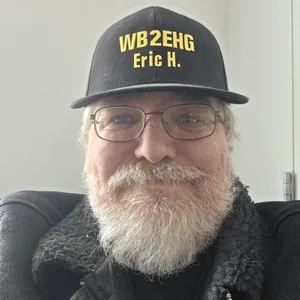
About Eric J. Hébert, WB2EHG — More about my Coast Guard service, communications background, and return to amateur radio.
On the Air — How I now use local repeaters, DMR, APRS, and linked radio systems to stay active and connected.
My Amateur Radio Station — The radios, antennas, digital hotspot, and applications behind my present-day communications capabilities.
New Ham Guide — A practical starting point for newly licensed operators learning how to get on the air and become part of the conversation.
73,
Eric — WB2EHG